
In regulated shipping environments, packaging is not simply about protecting a product in transit. It is about compliance, traceability, repeatability, and long-term preservation. This is especially true in defense, aerospace, and government supply chains, where mil spec packaging requirements govern how materials are protected, documented, and handled.
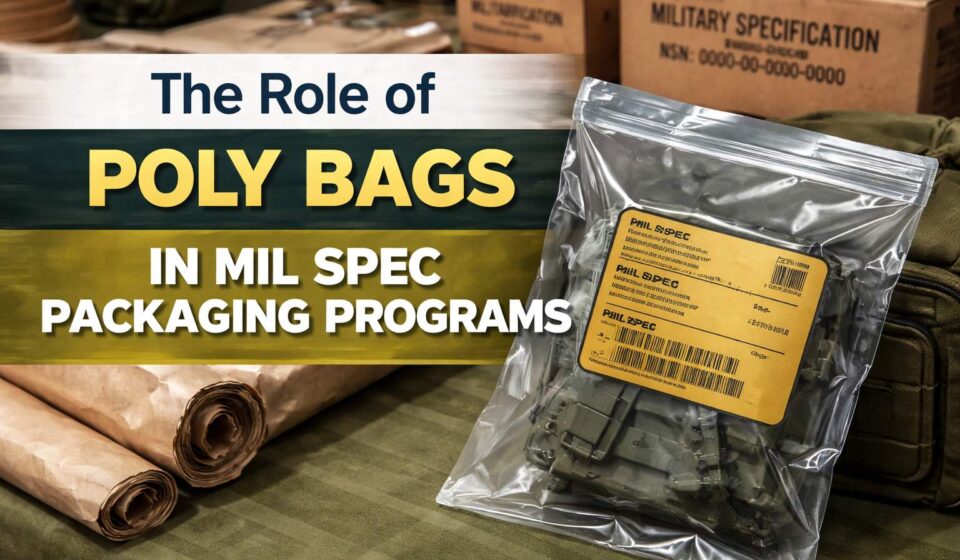
Within these systems, poly bags are often overlooked in favor of more visible components such as crates or cushioning. In reality, poly bags play a critical role in meeting mil spec packaging requirements and ensuring product integrity throughout storage and transport.
Why Mil Spec Packaging Demands Precision
Mil spec packaging standards are designed to ensure products survive harsh handling, long storage cycles, and unpredictable transportation environments. These standards address shock, vibration, corrosion, contamination, and environmental exposure.
Unlike commercial packaging, mil spec packaging emphasizes repeatable performance under worst-case conditions. Packaging must be applied consistently, documented accurately, and verified against defined requirements.
Manufacturers operating in these environments often rely on an experienced packaging company to interpret specifications correctly and apply them without introducing unnecessary complexity or cost.
Poly Bags as a First Line of Protection
Poly bags are commonly used in mil spec packaging as an initial protective layer. Their primary purpose is to isolate products from environmental exposure, including moisture, dust, oils, and handling contamination.
In many applications, poly bags serve as the first barrier against corrosion and surface damage. When combined with desiccants or corrosion-inhibiting materials, they help preserve product condition during long-term storage.
Poly bags are frequently specified in mil spec packaging for small parts, machined components, fasteners, and assemblies that require controlled environments prior to final use.
Material Selection Matters
Not all poly bags are suitable for regulated applications. Thickness, material composition, and sealing method all influence performance and compliance.
Mil spec packaging often requires poly bags with specific properties, such as puncture resistance, moisture vapor barrier performance, or chemical compatibility. Improper material selection can compromise protection or result in noncompliance.
A knowledgeable packaging company helps manufacturers select poly bags that meet specification requirements while remaining practical for production and handling.
Poly Bags and Preservation Packaging
Preservation is a core principle of mil spec packaging. Products may be stored for months or years before deployment, making long-term protection essential.
Poly bags are commonly used as part of preservation methods that include desiccants, barrier materials, and controlled sealing processes. Properly sealed poly bags help maintain internal conditions and protect against corrosion or degradation.
In many cases, preservation packaging is validated through testing and documentation, reinforcing the importance of consistent material selection and application.
Cleanliness and Contamination Control
Mil spec packaging standards often include cleanliness requirements, particularly for components used in aerospace or sensitive mechanical systems. Poly bags help prevent contamination during handling, staging, and transport.
By isolating components from external contact, poly bags reduce the risk of oils, dust, or debris compromising product performance. This is especially important for precision-machined parts and assemblies.
Packaging companies experienced in regulated environments often design packaging workflows that integrate poly bags seamlessly into compliance-driven processes.
Documentation and Traceability
One of the defining characteristics of mil spec packaging is documentation. Packaging materials, methods, and configurations must often be recorded and traceable.
Poly bags used in regulated programs may be identified by material type, size, and sealing method as part of packaging documentation. Consistency is critical, as deviations can trigger inspection failures or shipment rejection.
A packaging company familiar with mil spec requirements supports traceability by standardizing materials and maintaining clear specifications across production runs.
Balancing Compliance and Efficiency
Mil spec packaging is often perceived as slow or cumbersome, but well-designed systems can support both compliance and efficiency. Poly bags contribute to this balance by offering flexible protection without excessive bulk.
When specified correctly, poly bags simplify handling, reduce damage, and support standardized packaging configurations. This reduces rework and inspection time while maintaining compliance.
Packaging companies with experience in regulated programs often identify opportunities to streamline packaging without compromising requirements.
Cost Control in Regulated Packaging
While compliance is non-negotiable, cost control remains important. Over-specifying poly bags or using inappropriate materials increases expense without improving protection.
Optimizing poly bag thickness, size, and sealing method often reduces material usage while still meeting mil spec packaging requirements. Packaging assessments frequently reveal opportunities to improve efficiency through smarter material selection.
Working with a knowledgeable packaging company helps manufacturers control costs while maintaining confidence in compliance.
Poly Bags and Secondary Packaging
Poly bags rarely function alone in mil spec packaging systems. They are typically used in conjunction with cushioning, containers, and outer packaging such as boxes or crates.
For example, components may be sealed in poly bags, cushioned internally, and then placed into rigid containers for transport. Each layer serves a specific function within the overall packaging system.
Designing these layers to work together is essential for meeting performance and compliance goals.
Risk Reduction Through Packaging Expertise
Failures in mil spec packaging can have serious consequences, including rejected shipments, delayed programs, and contractual penalties. Many of these failures stem from misunderstanding specifications or applying materials inconsistently.
Packaging professionals with experience in mil spec environments help reduce risk by validating materials, documenting processes, and ensuring consistent execution.
Poly bags may appear simple, but their role in regulated packaging demands careful consideration and expertise.
The Value of a Trusted Packaging Company
Manufacturers operating in regulated supply chains benefit from working with a packaging company that understands mil spec packaging requirements in depth. This includes not only materials like poly bags, but also preservation methods, documentation, and inspection readiness.
Long-term partnerships help ensure consistency, reduce variability, and support continuous improvement as requirements evolve.
Packaging companies that provide this level of support become an extension of the manufacturer’s compliance and quality teams.
Packaging as a Compliance Tool
In mil spec environments, packaging is not a secondary concern. It is a critical compliance tool that protects products, preserves quality, and ensures traceability.
Poly bags play an essential role in these systems by providing controlled, reliable protection at the product level. When supported by an experienced packaging company and integrated into a broader mil spec packaging strategy, they help manufacturers meet demanding requirements with confidence.
As regulated supply chains continue to evolve, thoughtful packaging design will remain a key factor in program success.