There is something undeniably primal about our attraction to fire. For hundreds of thousands of years, the open flame was the center of human existence. It was where we cooked, where we stayed warm, where we told stories, and where we felt safe from the darkness beyond the cave mouth. In our modern age of underfloor heating, smart thermostats, and invisible radiators, we have largely sanitized the experience of staying warm. We press a button on a smartphone, and the air temperature rises. It is convenient, certainly, but it is also sterile. We have lost the visual and visceral connection to the source of our comfort.
This disconnection explains the profound resurgence in the popularity of the fireplace. Homeowners are no longer satisfied with a television being the sole focal point of the living room. There is a collective desire to return to a slower, more intentional way of living, often summarized by the Danish concept of “Hygge”—a mood of coziness and comfortable conviviality. At the center of this movement is the return of Stoves, which have evolved from the smoky, inefficient boxes of the past into highly sophisticated, eco-friendly heating machines that serve as the beating heart of the home.
Whether you live in a sprawling country farmhouse or a compact semi-detached in the suburbs, installing a wood burner or multifuel stove is more than just a home improvement project; it is a lifestyle change. It transforms a house from a mere structure that protects you from the elements into a sanctuary where you actively engage with warmth, light, and atmosphere.
The Psychology of the Flame
Why do we stare at fires? Psychologists and anthropologists have long studied the “hearth effect.” Research suggests that watching a flickering flame lowers blood pressure and induces a state of relaxation similar to meditation. In a world where we are constantly bombarded by blue light from screens—phones, laptops, TVs—the orange and yellow spectrum of a fire provides a necessary biological reset.
A stove demands your attention in a gentle way. It asks you to tend to it, to feed it, and to respect it. This ritual of building a fire, striking the match, and watching the kindling catch provides a transition point in the day. It signals that work is done, the evening has begun, and it is time to slow down. In an era of burnout and high stress, having a physical anchor for relaxation in your living room is a mental health asset that a standard radiator, for all its efficiency, simply cannot provide.
Energy Independence and “Zone Heating”
Beyond the romanticism, there is a hard-headed economic argument for solid fuel heating. In recent years, volatile energy markets have sent gas and electricity prices soaring. Relying 100% on the grid for your thermal comfort leaves you vulnerable to price hikes and, in rare cases, supply interruptions.
A stove provides a degree of energy independence. It allows you to practice “Zone Heating.” This is the concept of heating only the room you are actually using. On a chilly Tuesday evening in October, you don’t necessarily need to fire up the gas boiler to heat the bedrooms, the hallway, and the kitchen if you are just sitting in the lounge. By lighting the stove, you can bring the main living area up to a toasty 21°C or higher, while leaving the rest of the house at a lower, more economical background temperature.
Furthermore, fuel diversity is a security blanket. If the power goes out during a winter storm, a gas boiler (which needs electricity for the pump and ignition) will stop working. A wood-burning stove keeps working. It provides light, heat, and even a surface to boil a kettle or warm soup. For those living in rural areas prone to power cuts, this reliability is not a luxury; it is a necessity.
The Environmental Question: Ecodesign Ready
For a long time, wood burners faced criticism regarding air quality and particulate emissions. This was a valid concern with older, open fires and inefficient stoves manufactured decades ago. However, the industry has undergone a massive technological revolution, driven by strict legislation known as “Ecodesign.”
Modern Ecodesign Ready stoves are engineering marvels. They are designed to burn wood at incredibly high temperatures, ensuring that the combustion is almost complete.
-
Secondary and Tertiary Air: Modern stoves inject pre-heated air into the firebox above the flames. This re-ignites the smoke particles before they can escape up the chimney. This process, often seen as “rolling flames” at the top of the window, means you are burning the fuel and the smoke.
-
Efficiency Ratings: An open fire loses about 80% of its heat up the chimney. An old stove might lose 40-50%. A modern Ecodesign stove operates at 80%+ efficiency. This means you use fewer logs to get the same amount of heat, saving you money and saving trees.
When fueled with dry, seasoned wood (wood with a moisture content below 20%), a modern stove is a low-carbon heating method. Trees absorb carbon dioxide as they grow, and release it when they rot or burn. As long as the wood is sourced from sustainable, managed forests where new trees are planted to replace those felled, the cycle is broadly carbon neutral.
Wood vs. Multifuel: Making the Choice
When shopping for a stove, you will encounter two main categories: dedicated Wood Burners and Multifuel Stoves. Understanding the difference is key to your satisfaction.
Wood Burners are designed solely for burning logs. Wood burns best on a bed of ash, with air coming from above. Therefore, wood burners usually have a flat base inside the firebox and no ashpan (or a simplified one). Because they are optimized for one fuel type, they are often slightly more efficient at burning that specific fuel.
Multifuel Stoves offer flexibility. They are equipped with a raised grate and an ashpan underneath. This allows air to circulate under the fuel, which is necessary for burning smokeless coal or anthracite. The grate often has a riddling mechanism to shake the ash down into the pan.
-
The Advantage: If you run out of logs, or if you want a fire that burns “low and slow” overnight, smokeless coal is denser and lasts longer. A multifuel stove gives you the option to choose your fuel based on availability and the type of heat you want.
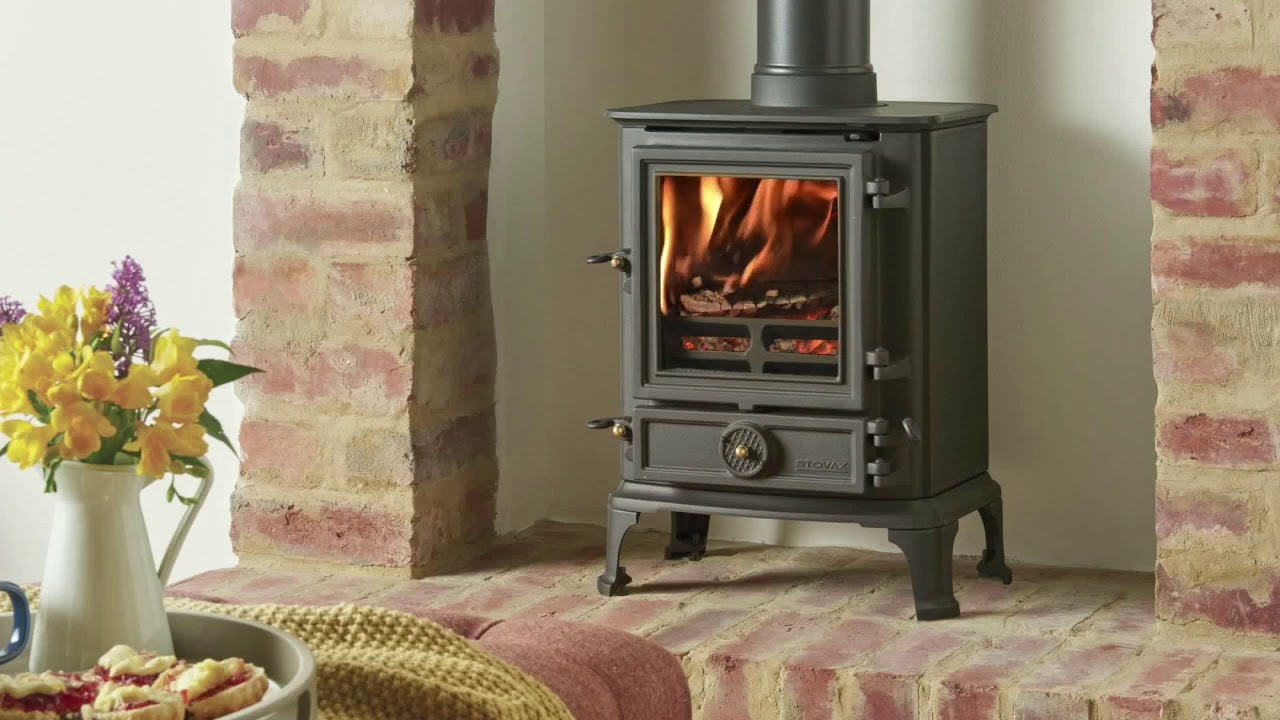
Design: From Cottage Core to Urban Chic
The image of a stove used to be inextricably linked with a stone cottage, a sleeping dog, and a beamed ceiling. While that aesthetic is timeless, stove design has broken out of the “rustic” box.
The Contemporary Look: For modern apartments and new builds, manufacturers are producing cylindrical stoves. These tall, pillar-like designs take up very little floor space and often feature curved glass doors that offer a 180-degree view of the flames. Some are even suspended from the ceiling or mounted on walls, appearing to float.
The Inset Stove: If you want a seamless look, “cassette” or inset stoves are built directly into the chimney breast or a false wall. They sit flush with the surface, looking like a living picture frame. This is ideal for minimalist interiors where you want the heat and the visual of the flame, but not the physical intrusion of a black metal box in the room.
Double-Sided Stoves: For open-plan living, a double-sided stove is the ultimate luxury. Placed in a central dividing wall, it heats two rooms at once (e.g., the kitchen and the dining room) and allows you to see through the fire to the space beyond. It connects the home in a way no other piece of furniture can.
Installation: Safety and Compliance
Installing a stove is not a DIY job. It involves fire, carbon monoxide, and structural alterations. In the UK, regulations are strict for good reason.
-
The Flue: The chimney is the engine of the stove. If the draw isn’t right, the stove won’t burn efficiently. Most installations require a flexible stainless steel liner dropped down the existing chimney to ensure a safe, gas-tight seal. If you don’t have a chimney, a “twin wall” flue system can be installed, which runs up through the house or out of an external wall.
-
HETAS: You should always use a HETAS registered installer (or the equivalent in your country). They can self-certify the work, meaning you don’t have to pay the local council for building control inspections. They ensure the hearth is the right thickness and that the stove is the correct distance from combustible materials (like your wooden mantelpiece or curtains).
-
Ventilation: Fire needs oxygen. In older, drafty houses, the stove just pulls air from the leaks in the windows. In modern, airtight homes, you may need an external air kit (direct air supply) that pipes air from outside directly into the stove, so it doesn’t suck the oxygen out of your living room.
The “Slow Living” Investment
It is important to view a stove not just as a purchase, but as an investment in the fabric of your home. Estate agents widely agree that a working fireplace or high-quality wood burner adds value to a property. It is a “heart string” feature; when potential buyers walk into a room with a lit fire, they don’t just see the house; they imagine living there. They imagine Christmas mornings and cozy Sunday afternoons.
But the real return on investment is personal. It is the change in how you use your home. It is the excuse to turn off the main lights, put down the tablet, and just be. It transforms a cold winter, which is usually something to be endured, into a season to be enjoyed.
Conclusion: The Warmth of Home
We live in an increasingly intangible world. We work in the cloud, we socialize online, and we stream our entertainment. A stove offers an antidote to this. It is tangible. The heat is intense and radiant. The wood has texture and scent. The sound of the crackle is real.
By bringing a stove into your home, you are reclaiming a piece of heritage and adapting it for the future. You are choosing a heating method that is sustainable, beautiful, and fiercely independent. Whether you choose a sleek, glass-fronted architectural piece or a sturdy cast-iron classic, the result is the same: you are putting the heart back into the home. You are creating a gathering place, a source of comfort that goes far beyond the reading on a thermometer. You are inviting the warmth in, in every sense of the word.