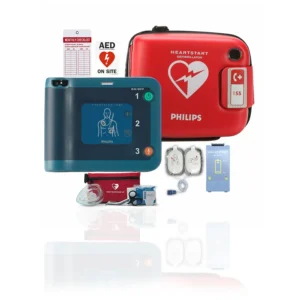
Sudden Cardiac Arrest (SCA) is one of the leading causes of death worldwide. It can strike anywhere and anytime—with little to no warning. The most powerful tool to save lives in such emergencies is the Automated External Defibrillator (AED). The Philips HeartStart OnSite AED is one of the most trusted and easiest-to-use defibrillators on the market, designed perfectly for both trained and untrained responders.
Whether you’re a business owner, school administrator, community leader, or concerned citizen, knowing how to use the Philips OnSite AED could mean the difference between life and death. This comprehensive guide walks you through every step using this device during an emergency, ensuring you feel confident and prepared to take action.
What Is the Philips OnSite AED?
The Philips HeartStart OnSite AED, also known as the HeartStart HS1, is an advanced life-saving device designed for public access and personal use. It comes ready-to-use straight out of the box and is FDA-approved for non-prescription purchase. This makes it perfect for workplaces, community centers, gyms, schools, and even at home.
Notable features include:
Lightweight and portable (weighing just 3.3 lbs)
Voice-directed coaching for each step
Pre-connected Smart Pads for quicker application
Quick Shock functionality to reduce time between CPR and shock delivery
Daily, weekly, and monthly self-tests to ensure readiness
Long-lasting battery with 4-year minimum standby life
These features ensure that even individuals with no medical background can operate the AED confidently in an emergency.
Why Quick AED Use Matters
Every minute that passes without defibrillation decreases a cardiac arrest victim’s chance of survival by 7–10%. Immediate use of an AED within the first 3–5 minutes can bring survival rates up to 70%. That’s why having an accessible AED like the Philips OnSite—and knowing how to use it—is critical.
Step-by-Step Guide: How to Use Philips OnSite AED
Step 1: Assess the Emergency
When someone collapses suddenly:
Check for responsiveness: Gently tap the person and call out loudly.
Check for breathing: Look for chest movement; listen for breath sounds.
Call emergency services immediately or ask someone else to do so.
Send someone to get the nearest AED, if you’re not alone.
Begin CPR immediately if the person is not breathing normally.
Step 2: Activate the AED
As soon as you have the Philips OnSite AED:
Press the green “On” button to start the device.
The AED immediately begins clear voice instructions, guiding you through each step.
Listen closely and follow every prompt. The device is designed to lead you.
Step 3: Prepare the Patient
Lay the person flat on a hard surface.
Remove clothing from the chest to expose the skin. Cut or tear clothing if necessary.
Dry the chest if it’s wet or sweaty. Wipe thoroughly using a towel or cloth.
If there’s excessive chest hair, shave or trim it quickly using a razor from the Philips AED kit (if available), but only if necessary for pads to stick well.
Step 4: Attach the Smart Pads
Open the pad cartridge lid on the AED and pull out the pads.
Peel the pads from the backing one at a time.
Place the pads exactly as shown on the diagrams:
Pad 1: Upper right side of the person’s chest, below the collarbone.
Pad 2: On the left side, below the armpit over the lower ribs.
Ensure both pads stick firmly to the skin. Poor adhesion can limit effectiveness.
Step 5: Let the AED Analyze
Once the pads are placed, do not touch the person.
The AED will say: “Analyzing heart rhythm. Do not touch the patient.”
The device evaluates the heart’s rhythm automatically.
Step 6: Deliver a Shock If Advised
If the AED detects a shockable rhythm, it will say: “Shock advised. Stand clear.”
Ensure that no one is touching the patient.
The AED’s orange shock button will flash—press it when prompted.
A controlled electrical shock is delivered to restore normal heart rhythm.
Only deliver the shock when the AED instructs you. The device only recommends shocks when absolutely necessary, making it extremely safe to use.
Step 7: Perform CPR
After the shock is delivered or if no shock is advised:
The AED will say: “Begin CPR.”
It provides voice coaching and metronome beats (at ~101 beats per minute) to guide correct compression rhythm.
Follow these CPR basics:
Place hands in the center of the chest.
Push down hard and fast—2 inches deep, at a rate of 100–120 compressions per minute.
Allow full chest recoil between compressions.
The AED will prompt you when it’s time to stop CPR and re-analyze.
Step 8: Continue Until Help Arrives
Keep following the AED’s prompts for CPR, analysis, and shocks.
Do not turn off or remove the AED until emergency medical personnel take over.
If the person regains consciousness, leave the pads in place but stop CPR.
Philips OnSite AED: Additional Tips for Success
Practice Makes Perfect
Even though the AED is easy to use, hands-on practice increases confidence. Try using a Philips AED trainer unit to simulate real-life situations without any risk.
Maintain Your AED
For maximum performance during an emergency:
Check the green status indicator light—if it’s blinking, the device is ready.
If the indicator is steady red, troubleshoot immediately.
Replace pads and battery every 2–5 years or after use.
Philips offers a simple expiration check portal—enter your device serial number and pad lot number to check expiry dates.
Pair AED with CPR Training
While AEDs save lives, combining early CPR and AED use dramatically increases survival rates. Enrolling in CPR/AED courses assures you’re fully prepared for real emergencies.
Install AEDs in a Visible Place
AEDs should be:
Easily accessible
Clearly marked with signage
Located near high-traffic or high-risk areas
Why Choose Philips OnSite AED?
Still deciding which AED model to choose? Here are reasons to consider the Philips OnSite AED:
Most clinically studied AED available
Trusted by police, fire departments, and EMS agencies
Simple design that anyone can use confidently
Minimal maintenance with daily self-tests
Widely available accessories and replacement parts
Optional Pediatric Pads for safe use on children
FAQ: Common Questions About Philips OnSite AED
Q: Can I use the AED on a child?
A: Yes, with specially designed pediatric pads (Infant/Child Smart Pads). Always keep them nearby if children may be present.
Q: What if I’m unsure whether the person has a pulse?
A: Use the AED anyway. The device will not shock unless required.
Q: Do I need a prescription to buy this AED?
A: No. The Philips HeartStart OnSite AED is FDA-approved for over-the-counter sale.
Final Thoughts
Being prepared for cardiac emergencies isn’t just a good idea—it’s a responsibility, especially in public-facing environments. The Philips HeartStart OnSite AED offers peace of mind with its intuitive design, reliable technology, and proven performance. Whether you’re a first-time user or trained responder, this AED gives you the confidence and capability to step in when someone’s life is at stake.
Equip your space with a Philips OnSite AED today, and ensure you’re ready to save a life when every second counts.
read more. https://repurtech.com/