A dog stroller isn’t just a convenience, it’s a thoughtful way to keep your pet comfortable, included, and safe during daily outings. Whether your dog is ageing, recovering from an injury, sensitive to weather, or simply enjoys a relaxed ride, choosing the right stroller can make walks smoother for both of you. The key is finding a balance between comfort, practicality, and your everyday routine.
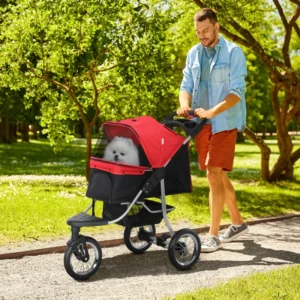
Below is a clear, pet-first approach to help you choose a dog stroller that truly fits your needs.
Start With Your Dog’s Size and Weight
The most important factor is making sure the stroller comfortably supports your dog.
- Measure your dog from nose to tail and from the ground to the top of their shoulders.
- Check weight limits carefully, always choose a stroller that supports more than your dog’s current weight.
- Allow room to move so your dog can sit, lie down, and turn without feeling cramped.
A stroller that feels spacious but secure helps your dog stay calm and relaxed during longer outings.
Match the Stroller to Your Walking Environment
Where you plan to use the stroller matters more than many people expect.
- Smooth sidewalks and paved paths work well with smaller wheels and lightweight frames.
- Uneven paths, gravel, or park trails benefit from larger wheels and better suspension.
- Crowded areas are easier to manage with a stroller that turns smoothly and brakes quickly.
Choosing a stroller designed for your usual routes reduces strain on your arms and keeps your dog steady.
Focus on Comfort and Ventilation
A comfortable dog is more likely to enjoy the ride.
- Look for padded interiors that support joints and reduce vibration.
- Breathable mesh panels help with airflow while keeping insects out.
- Adjustable openings allow your dog to see their surroundings without feeling exposed.
Good ventilation is especially important during warmer days or longer walks.
Check Safety Features Carefully
Safety should never be an afterthought.
- Built-in safety tethers prevent sudden jumps.
- Reliable brakes keep the stroller stable when stopped.
- Strong frames and secure stitching help maintain structure over time.
A well-designed stroller should feel solid, even when turning or stopping suddenly.
Consider Storage and Daily Convenience
A dog stroller should make outings easier, not more complicated.
- Under-seat baskets are helpful for leashes, treats, water, and personal items.
- Cup holders and small pockets add convenience for longer walks.
- A foldable design makes storage and transport much simpler.
If you plan to use the stroller often, these small features quickly become essential.
Think About Your Dog’s Personality
Every dog reacts differently to new experiences.
- Nervous dogs may prefer enclosed designs that feel more secure.
- Curious dogs often enjoy open or adjustable canopies for better visibility.
- Older dogs benefit from low-entry designs that reduce lifting strain.
Choosing a stroller that matches your dog’s temperament helps build positive associations with rides.
Balance Quality With Long-Term Value
Instead of focusing only on price, think about durability and daily use.
- Strong wheels, quality fabric, and sturdy frames last longer and perform better.
- A well-built stroller often saves money by avoiding replacements or repairs.
- Comfort and ease of use tend to matter more over time than extra features.
A reliable stroller should feel like a natural extension of your walking routine.
The right dog stroller supports your pet’s comfort while fitting seamlessly into your lifestyle. By focusing on size, terrain, safety, and everyday practicality, you can choose a stroller that keeps walks enjoyable, whether it’s a quick neighbourhood outing or a longer, relaxed stroll. A good stroller doesn’t replace walking together; it simply gives your dog a comfortable way to stay by your side.
FAQs
1. Can a dog stroller help if my dog suddenly stops walking mid-walk?
Yes. A dog stroller is useful for dogs that tire unexpectedly, overheat, or lose motivation during longer outings. It allows you to continue the walk without forcing your dog to push past their limits, keeping the experience calm and stress-free.
2. What should I do if my dog refuses to sit in the stroller at first?
Start by introducing the stroller indoors with no movement. Let your dog explore it using treats and short sit-ins, then gradually add slow pushes. Familiar scents and a favourite blanket can also help reduce hesitation.
3. Is a dog stroller practical for multi-pet households?
It can be, especially if one pet has mobility issues. A stroller allows you to walk all pets together while giving the less active dog a break, maintaining a consistent routine without cutting walks short.