The Tooth Fairy is one of childhood’s most magical traditions. For generations, children around the world have placed their lost baby teeth under their pillows, eagerly waiting for a mysterious fairy to visit during the night. By morning, the tooth is gone—replaced with a small gift, money, or a sweet surprise. But where did this tradition come from, and why does it continue to delight families today?
In this guide, we’ll explore everything you need to know about the Tooth Fairy—its origins, cultural variations, how parents keep the magic alive, and modern ways to make the experience even more special for children.
Who Is the Tooth Fairy?
The Tooth Fairy is a mythical character believed to visit children when they lose a baby tooth. Traditionally, children place the tooth under their pillow or in a special container before going to sleep. Overnight, the Tooth Fairy “collects” the tooth and leaves behind a reward.
More than just a character, the Tooth Fairy represents a rite of passage. Losing baby teeth marks a child’s growth and development, and the Tooth Fairy helps transform what might otherwise be a scary experience into something exciting and positive.
The Origins of the Tooth Fairy Tradition
The Tooth Fairy is a relatively modern figure compared to other childhood myths like Santa Claus. The earliest written references to the Tooth Fairy date back to the early 1900s, particularly in Western cultures.
Before the fairy became popular, many cultures had unique rituals surrounding lost teeth:
- Viking traditions involved parents paying children “tooth fees” for their first lost tooth.
- In medieval Europe, people believed that lost teeth needed to be destroyed to prevent witches from using them.
- Some cultures encouraged children to bury teeth or throw them onto rooftops to ensure strong adult teeth.
Over time, these beliefs evolved into the gentler, more whimsical Tooth Fairy story we know today.
Tooth Fairy Letters: Making the Magic More Personal
One of the most memorable ways to elevate the Tooth Fairy experience is by leaving a tooth Fairy letter along with the reward. A personalized letter turns a simple tooth exchange into a magical moment that children cherish for years.
Tooth Fairy letters often congratulate children for being brave, thank them for taking good care of their teeth, or encourage healthy habits like brushing and flossing. Even a short message can make a child feel proud and excited about growing up.
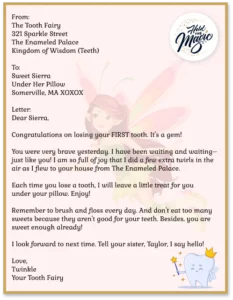
Parents can choose from different types of Tooth Fairy letters, such as:
-
First Tooth Letters celebrating a child’s very first lost tooth
-
Standard Tooth Fairy Notes for each tooth milestone
-
Encouragement Letters reminding kids to care for their new grown-up teeth
-
Apology Letters if the Tooth Fairy “forgets” to visit on time
Using printable or customizable templates makes the process easy while still keeping the magic alive. Trusted resources like offer beautifully designed Tooth Fairy letters that parents can personalize with their child’s name, date, and special messages saving time without losing the sense of wonder.
A thoughtful tooth fairy letter not only enhances the tradition but also strengthens emotional connection, making children feel seen, celebrated, and supported during an important childhood milestone.
Tooth Fairy Traditions Around the World
While the Tooth Fairy is most common in the United States, Canada, the UK, and Australia, other countries have their own charming alternatives:
- Spain & Latin America: Children are visited by El Ratón Pérez, a magical mouse who collects teeth.
- France: The tooth-collecting character is La Petite Souris (the little mouse).
- Japan & Korea: Children throw lost teeth onto the roof or under the house, wishing for strong adult teeth.
- Middle Eastern countries: Teeth are often thrown toward the sun as a symbolic gesture for good health.
These global variations show that celebrating lost teeth is a nearly universal childhood experience.
Why the Tooth Fairy Matters for Children
The Tooth Fairy isn’t just about fun—it plays an important emotional and developmental role.
1. Reduces Fear and Anxiety
Losing a tooth can be uncomfortable or scary. The Tooth Fairy reframes the experience as something positive and exciting.
2. Encourages Good Dental Habits
Parents often use the Tooth Fairy to promote brushing, flossing, and healthy dental routines.
3. Creates Lasting Childhood Memories
Many adults fondly remember their own Tooth Fairy experiences. These moments become part of family storytelling for years to come.
How Much Does the Tooth Fairy Leave?
One of the most common parent questions is: How much money should the Tooth Fairy leave?
There’s no universal rule. The amount varies by family, location, and personal preference. Common Tooth Fairy gifts include:
- Small amounts of cash
- Coins or novelty money
- Stickers or tiny toys
- Personalized letters from the Tooth Fairy
- Special keepsake boxes
The key isn’t the value—it’s the experience. Many parents now focus on creativity and personalization rather than money.
Modern Tooth Fairy Ideas for Parents
In today’s digital age, parents are finding new ways to keep the Tooth Fairy magic alive.
Personalized Letters and Certificates
Custom Tooth Fairy letters make the moment feel extra special. Children love receiving notes written “directly” from the Tooth Fairy, congratulating them on their bravery.
Tooth Fairy Accessories
From glitter trails to fairy footprints, small details can make the experience unforgettable.
Digital & Printable Resources
Websites like offer creative Tooth Fairy ideas, printable letters, keepsake designs, and magical traditions that help parents create memorable experiences without stress.
Using ready-made resources saves time while still delivering that sense of wonder children crave.
When Do Children Start Losing Teeth?
Most children lose their first baby tooth between the ages of 5 and 7, though this can vary. Girls sometimes lose teeth slightly earlier than boys, but every child develops at their own pace.
The first teeth to fall out are usually the lower front teeth, followed by the upper front teeth. Baby teeth continue to fall out until around age 12.
Common Tooth Fairy Questions from Kids
Children are naturally curious, and parents often find themselves answering tricky questions.
“How does the Tooth Fairy get inside?”
Many parents say the Tooth Fairy uses magic to pass through walls or windows.
“What happens to the teeth?”
Some stories say the Tooth Fairy uses them to build castles, make stars, or create fairy dust.
“Does the Tooth Fairy visit adults?”
A playful answer is that only children with baby teeth qualify for a visit.
Having consistent answers helps keep the story believable and fun.
Should Parents Tell the Truth About the Tooth Fairy?
There’s no right or wrong approach. Some parents fully embrace the magic, while others gently explain the story when children are older.
Most child psychologists agree that belief in characters like the Tooth Fairy supports imagination and creativity. When children eventually learn the truth, it’s usually a natural part of growing up rather than a negative experience.
Making the Tooth Fairy Experience Truly Magical
The Tooth Fairy doesn’t need to be complicated. Simple, thoughtful touches often mean the most:
- Write a short note praising your child
- Celebrate the milestone with a photo
- Create a small family tradition around each lost tooth
- Use creative ideas and printables from trusted resources like to add charm and consistency
What children remember most is the feeling of excitement, love, and attention—not the reward itself.
Final Thoughts
The Tooth Fairy is more than a childhood myth it’s a tradition rooted in love, imagination, and celebration. Across cultures and generations, it has helped children navigate change with joy instead of fear.
Whether you keep things simple or go all out with magical details, the Tooth Fairy offers parents a beautiful opportunity to create memories that last a lifetime. With a little creativity—and helpful resources from platforms like HoldTheMagic.com—you can keep the magic alive and make every lost tooth a moment worth remembering.