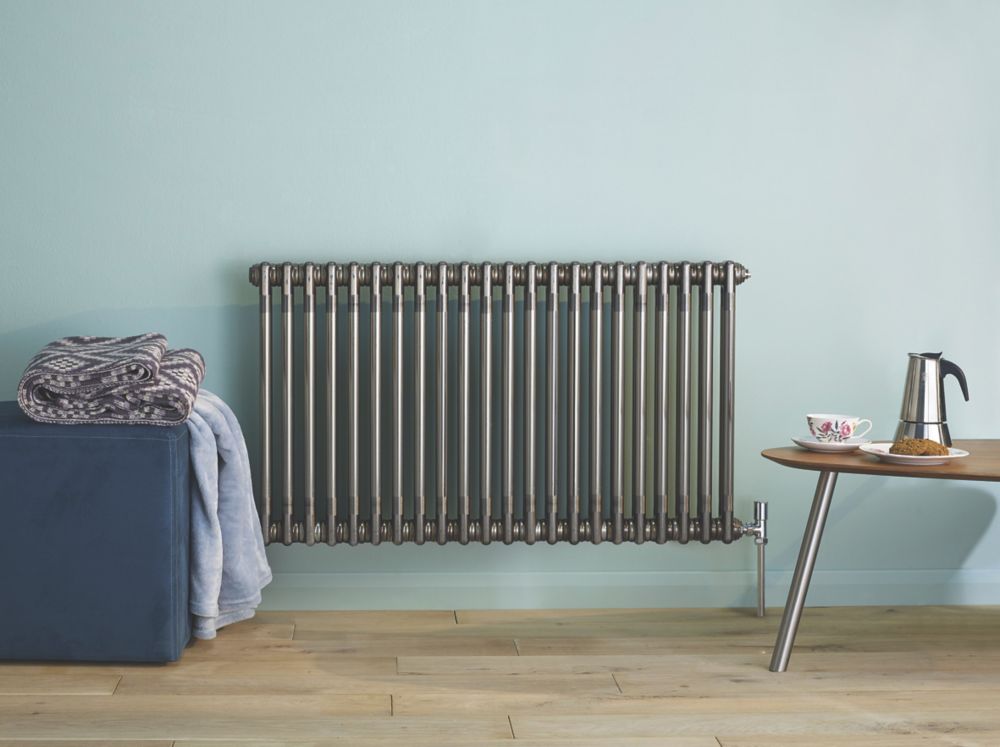
There is a rhythm to the history of design, a cyclical nature where the discarded innovations of the past eventually find their way back into the spotlight, not as relics, but as revered solutions. We see it in the exposed brickwork of loft apartments, the resurgence of vinyl records, and the return of mechanical watches. In the world of home heating, this renaissance is currently centered around a specific, sculptural form that defined the warmth of the 19th and early 20th centuries. While for decades we tried to flatten our heating, pressing it into unobtrusive, characterless white panels that hugged the wall in silent anonymity, we have collectively realized that we lost something in that process. We lost texture. We lost depth. We lost the visual weight that anchors a room.
The return of the multi-columned heating unit is not merely a nostalgic trip down memory lane. It is a rejection of the disposable, plastic-fantastic aesthetic that dominated the millennium turn. It is an embrace of solidity, of visible mechanics, and of objects that look like they were built to outlast the building itself. This resurgence speaks to a deeper desire in the modern homeowner: the need for authenticity. We no longer want our functional items to be invisible; we want them to be beautiful. We want the “machine for living” to look like a machine, polished and proud. The column radiator, with its repetitive vertical lines and rhythmic shadows, offers exactly this. It bridges the gap between the raw industrialism of a factory and the cozy intimacy of a living room, proving that heavy metal and soft comfort are not mutually exclusive concepts.
The Physics of Nostalgia: Engineering Comfort Through Classic Design
To understand the enduring appeal of this design, we must look beyond the aesthetic and into the engineering principles that birthed it. The original concept was simple yet brilliant: maximize surface area to maximize heat transfer. Unlike a flat panel which has a limited face to present to the room, a column design folds the metal back on itself, creating deep channels and multiple fins. This accordion-like structure means that a relatively compact unit can possess a massive amount of surface area in contact with the air.
When we analyze the resurgence of Column Radiators in contemporary interior design, we find that this structural advantage is as relevant today as it was in 1890. The design creates powerful convection currents. Cold air is drawn up from the floor, passes through the heated “chimneys” formed by the columns, and accelerates upwards, cycling the air in the room with remarkable efficiency. This is not just a heater; it is a passive engine. The modern iterations of these units have refined this process. While they mimic the look of the heavy cast iron originals, many are now precision-welded from high-grade steel. This material shift retains the classic multi-column look but drastically reduces the thermal mass, allowing them to heat up faster and respond more nimbly to modern thermostatic controls. It is the perfect hybrid: the soul of the Victorian era with the heart of 21st-century efficiency.
Depth and Dimension: The Spatial Logic of Multi-Column Configurations
One of the most overlooked aspects of this radiator style is the versatility offered by its depth. In the world of flat panels, you generally have two choices: single or double. The column style, however, operates in a three-dimensional space. You can specify units in two, three, four, or even six-column depths. This “z-axis” customizability is a powerful tool for architects and interior designers.
Consider a narrow hallway or a small landing where wall space is at a premium. A standard wide radiator would be impossible to fit. However, a four-column radiator is thick but narrow. You can install a unit that is only 30cm wide but, because of its depth and height, puts out the same heat as a meter-wide panel. Conversely, in a room where you want the radiator to sit flush and unobtrusive behind a door, a two-column variation offers the aesthetic without the protrusion. This modularity allows the heating system to adapt to the architecture, rather than forcing the room layout to bow to the constraints of the plumbing. It transforms “dead space”—like the narrow strip of wall next to a patio door or a bay window—into a high-output heating zone.
The Bay Window Solution: Curving Around the Problem
Speaking of bay windows, they represent one of the most notoriously difficult features to heat in British architecture. They are beautiful, light-filled, and usually the coldest part of the room due to the expansive glass. Traditionally, homeowners had to place a radiator on a flat wall adjacent to the window, which meant the cold draft from the glass would travel across the floor before meeting the heat source.
The column design offers a unique solution: the curved radiator. Because column radiators are constructed from individual vertical sections welded together, manufacturers can introduce a slight angle at each join during the fabrication process. This allows the radiator to be built with a customized radius that perfectly matches the curve of a bay window. Placing the heat source directly under the glass is the golden rule of heating; the rising curtain of warm air acts as a barrier, trapping the cold against the glass and preventing it from entering the room. A curved column radiator in a bay window is not just a heating solution; it is a piece of bespoke joinery in metal, turning a problem area into the cosiest spot in the house.
Beyond the White Enamel: A Canvas for Color
For decades, “radiator white” (usually RAL 9016) was the default, and often only, option. It was a color chosen to blend in with white walls. But the column radiator begs to differ. Its complex geometry, full of ridges and valleys, catches the light in a way that flat surfaces do not. This makes it an exceptional candidate for bold color and interesting finishes.
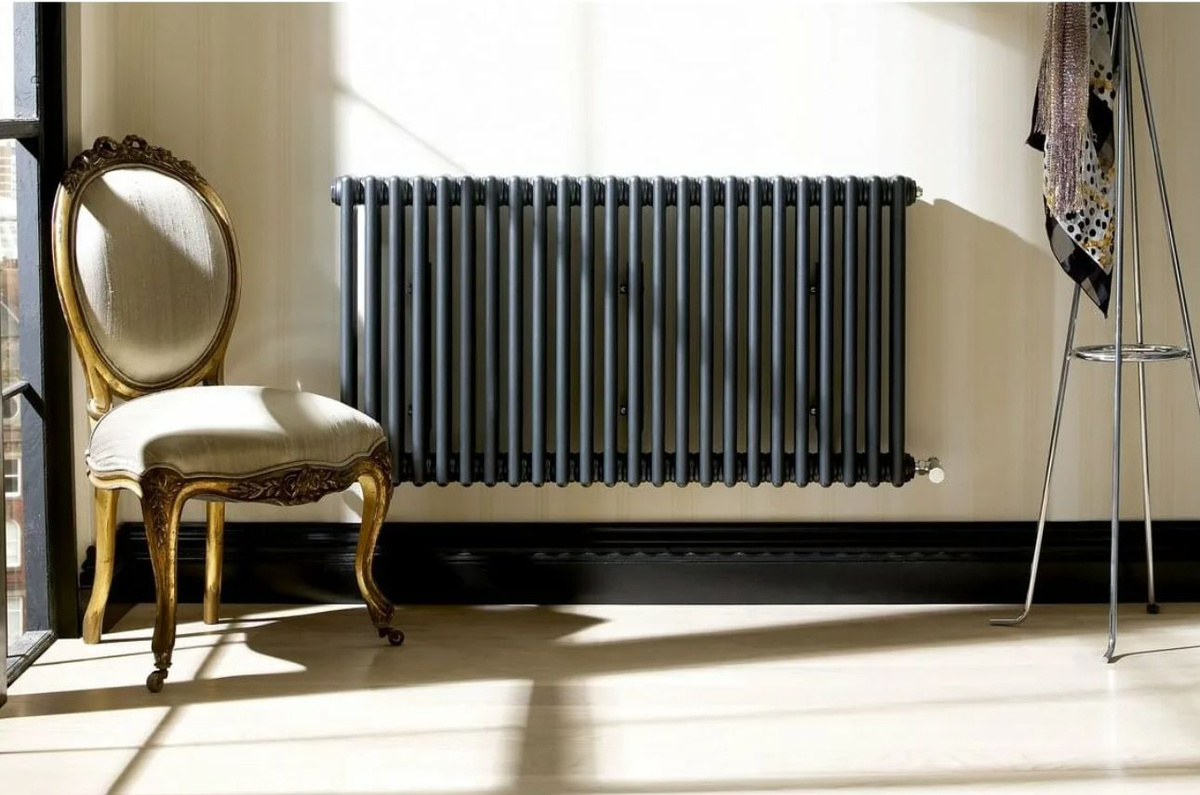
We are seeing a massive shift towards “raw” finishes. Lacquered bare metal, where the weld lines and manufacturing marks are visible under a clear protective coat, is incredibly popular in industrial-chic interiors. It celebrates the honesty of the manufacturing process. On the other end of the spectrum, deep, matte tones like anthracite, midnight blue, and forest green are being used to turn the radiator into a feature piece. Against a light wall, a dark column radiator becomes graphic and architectural, drawing the eye much like a piece of art or furniture. The shadows cast between the columns add texture to the color, making it feel richer and more dynamic than a flat block of paint. This ability to carry color transforms the radiator from a utility to be hidden into a pivotal part of the room’s color palette.
The Vertical Advantage: Utilizing Upward Space
The traditional mental image of a radiator is a horizontal rectangle sitting under a window. But as our homes have become smaller and our furniture demands have grown, low-level wall space has become a luxury. We want that space for sofas, bookcases, or sideboards. This has driven the explosion in popularity of the vertical column radiator.
Soaring up to 1.8 or 2 meters high, these “tall boys” utilize the dead space on a wall that is usually left empty. They are visually striking, drawing the eye upward and emphasizing the ceiling height, making a room feel larger. Functionally, they are powerhouses. A tall vertical column radiator has a chimney effect that is even more pronounced than its horizontal cousins, driving warm air powerfully into the room. They are particularly effective in kitchens, where cabinets consume all the lower wall space, or in bathrooms, where they can double as high-capacity towel warmers with the addition of a simple rail bar. The vertical column is the ultimate problem solver for the space-starved modern home.
Hygiene and Air Quality: The Open Architecture Benefit
A rarely discussed benefit of the column design is hygiene. Standard panel radiators, specifically the “convector” types (Type 21 or Type 22), rely on rows of jagged metal fins hidden between the panels to increase surface area. These fins are dust traps. They collect pet hair, skin cells, and dust mites in a space that is almost impossible to clean without specialized brushes and removing the top grille. When the heating turns on, the convection current lifts this dust into the air, which can be an irritant for allergy sufferers.
Column radiators, by contrast, are “open” structures. There are no hidden fins, no trapped boxes, and no grilles. You can see all the way through them. This makes them incredibly easy to clean; a simple pass with a feather duster or a vacuum nozzle keeps them pristine. There is nowhere for dust to hide. For households with asthma sufferers or those who simply value a cleaner air environment, this accessible design is a significant health advantage. It ensures that the air circulating in your room is warming you, not poisoning you with accumulated allergens.
The Tactile Experience: Warmth You Can Touch
There is a tactile quality to column radiators that flat panels lack. Because of their rounded, tubular edges, they are safer and more inviting. A sharp-edged steel panel is not something you want to bump into, nor is it comfortable to lean against. A column radiator, however, invites interaction. On a cold day, it is natural to lean against the rounded columns to warm your back. They are often used in nurseries and children’s rooms for this reason; the lack of sharp corners makes them a safer option for toddlers who are prone to stumbling.
This “touchability” extends to drying clothes. While we shouldn’t cover radiators entirely as it blocks the heat, the column shape is perfect for quickly warming a pair of socks or gloves. The gaps between the columns allow air to circulate even when an item is draped over them, preventing the scorching that can happen on flat panels. It brings the fire-side experience of drying wet clothes after a winter walk into the central heating age.
Installation: The Retrofit Reality
A common fear for homeowners is that upgrading to these “fancy” radiators will require a complete replumbing of the house. The reality is far less dramatic. The heating industry has standardized pipe centers and thread sizes to a large degree. Most column radiators are designed to be direct replacements for standard panels.
However, the weight is a consideration. While steel column radiators are lighter than cast iron, they are still heavier than single panels. This requires checking the integrity of the wall. Solid masonry walls are fine, but plasterboard stud walls may need the location of the timber studs to be identified for secure fixing, or the use of floor mounts. Floor mounting—where the radiator’s weight is taken by feet resting on the floor rather than brackets on the wall—is not only a practical solution for weak walls but also a stylistic choice. It adds to the authentic, traditional look, mimicking the days when cast iron radiators were too heavy to hang and had to stand on the floor. This installation method also solves the issue of tiling; you can tile the wall behind the radiator easily before installation, leaving a neat, clean finish.
The Efficiency Myth: Old Looks, New Tech
It is easy to assume that because something looks “old fashioned,” it must be inefficient. Critics might argue that column radiators hold too much water compared to ultra-low-water-content aluminum panels. While it is true they have a higher water volume than some ultra-modern counterparts, the gap has closed significantly with laser-welded steel manufacturing.
Furthermore, the “thermal lag” of a column radiator—the fact that it stays warm for a while after the boiler turns off—can be an advantage in creating a stable ambient temperature. Unlike low-mass radiators that go cold the second the thermostat clicks off, column radiators provide a smoother heat curve, gently releasing their stored energy. This prevents the “on-off” feeling that can make a home feel drafty. When paired with a modern condensing boiler or even a heat pump (provided the sizing is calculated correctly for lower flow temperatures), column radiators are a highly effective and comfortable heat emitter. They are not energy vampires; they are energy buffers.
Conclusion
The home is a mirror of the self, and the choices we make in its furnishing reflect our values. In choosing the column radiator, we are voting for substance over superficiality. We are choosing an object that refuses to hide, that celebrates its function through its form. We are acknowledging that the systems that keep us alive—the plumbing, the heating, the electricity—are not shameful necessities to be boxed in, but vital components of our shelter that deserve to be celebrated.
This radiator style has survived the test of time not just because it looks good in a brochure, but because it works. It works in the drafty farmhouse, and it works in the minimalist city apartment. It works because it understands the basic laws of thermodynamics and executes them with a grace that a flat sheet of steel can never replicate. It allows us to inject color, texture, and history into our rooms without sacrificing a single degree of warmth.
As we look to the future of housing, where longevity and sustainability are paramount, the column radiator stands as a beacon of sensible design. It is built to last, easy to maintain, and timeless in its appeal. It is the architectural equivalent of a good leather jacket or a solid oak table—an investment that improves with age and never feels out of place. So, when you next consider how to heat your home, look back to move forward. embrace the column, and let the shadows and curves of this industrial icon bring a new depth of warmth to your life.