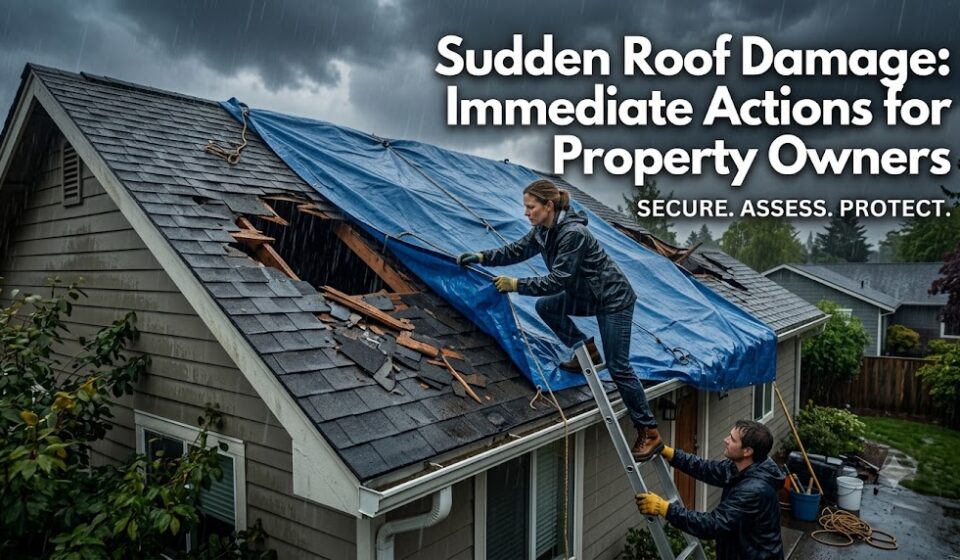

When severe weather strikes, fallen tree branches smash through decking, or sudden structural failures occur, property owners face an immediate, high-stress crisis. Water entering a building rapidly degrades drywall, ruins insulation, compromises electrical circuits, and creates conditions for mold growth within 24 to 48 hours.
Navigating a roofing crisis requires a clear distinction between immediate stabilization and permanent restoration. Knowing how to secure the property safely while managing insurance requirements helps minimize total loss and keeps repairs moving smoothly.
Triage Phase: Stabilizing the Structure Safely
The moments directly following severe roof damage require quick decision-making, but personal safety must remain the absolute priority. Stepping onto a damaged, wet, or structurally compromised roof during or immediately after a storm poses extreme hazards.
Indoor Damage Control
Before addressing the exterior, focus on mitigating interior damage:
- Contain Water Flow: Place large buckets or plastic bins beneath active ceiling drips. To prevent water from pooling and spreading horizontally across drywall ceilings, puncture a small relief hole in the center of the sagging plaster or drywall to channel water directly into a bucket.
- Protect Valuable Assets: Move furniture, electronics, and paper records out of the affected room or cover them with heavy-duty plastic sheeting.
- Isolate Electrical Hazards: If water drips near light fixtures, ceiling fans, or wall outlets, shut off power to those circuits at the main breaker box immediately to prevent electrical fires or shock.
Exterior Tarping Protocols
Temporary waterproofing, typically through professional emergency tarping, is critical to stop active leaks while waiting for permanent reconstruction. High-grade woven polyethylene tarps must be properly weighted or fastened using wood furring strips nailed directly over intact sections of the roof structure.
Simply laying a tarp over shingles with sandbags is rarely sufficient during high winds; a properly installed tarp wraps over the roof ridge to prevent wind-driven rain from blowing underneath the leading edge.
Documenting Losses for Insurance Claims
Dealing with insurance adjusters requires detailed, objective documentation gathered right after the incident occurs. Thorough records ensure that claim payouts accurately reflect the true scope of damage to both the building and interior belongings.
Start by capturing clear, high-resolution photographs and video footage of the active damage. Document water dripping inside the structure, damaged ceilings, soaked flooring, and any fallen debris outside. Photograph the exterior from ground level, noting damaged shingles, missing flashing, or structural indentations.
Keep a detailed log of every action taken following the event:
- Time and date the leak or damage was discovered.
- Receipts for temporary containment supplies, such as tarps, buckets, or wet-vac rentals.
- Contact logs detailing every phone call with insurance representatives and contractors.
Most homeowner and commercial property insurance policies contain a “mitigation clause.” This clause legally obligates the policyholder to take reasonable, timely steps to prevent secondary damage, such as water spreading to undamaged rooms. Hiring a qualified team to perform immediate Emergency Roof Repair fulfills this obligation, ensuring that your insurance company cannot deny secondary water damage claims due to owner negligence.
Identifying Hidden Structural Damage
A visible hole in a roof or missing section of shingles is obvious, but water intrusion often travels far from its original point of entry. Water follows the path of least resistance, running along rafters, pipe penetrations, and ceiling joists, before finally breaking through interior drywall.
An effective assessment must look beyond surface-level damage to evaluate underlying components:
Structural Framing and Sheathing
Heavy impacts from tree limbs or prolonged water exposure can rot OSB or plywood roof decking. If the underlying wood becomes saturated, its structural strength collapses, leaving the area vulnerable to sagging. Structural rafters or trusses must be inspected for cracks, splits, or structural deflections caused by heavy weight loads.
Insulation Contamination
Blown-in fiberglass or cellulose insulation acts like a sponge when exposed to ceiling leaks. Saturated insulation completely loses its R-value (thermal resistance) and traps moisture against structural ceiling joists. Saturated insulation generally cannot be dried in place; it must be completely removed, disinfected, and replaced to prevent persistent mold spores from circulating through the building’s HVAC system.
Electrical and Mechanical Systems
Roof leaks occurring near HVAC air handlers, solar panel conduit penetrations, or junction boxes pose hidden long-term risks. Corrosion on copper wiring or internal circuit boards may not cause an immediate power failure, but it leads to severe equipment malfunction or short circuits weeks after the initial flooding event.
Moving from Temporary Stabilization to Permanent Restoration
Once the initial emergency is stabilized and the insurance adjuster completes their field assessment, attention shifts to long-term reconstruction. Property owners should resist the urge to apply quick, superficial fixes, such as simply smearing roofing cement over cracked materials, as permanent solutions. Patchwork fixes rarely withstand subsequent seasonal storms and often void remaining manufacturer warranties on surrounding materials.
A comprehensive restoration plan should address why the failure occurred in the first place. If wind uplift detached perimeter flashing, the permanent repair should include higher-gauge metal flashing secured with tighter fastener spacing. If water pooled along low-slope valleys, re-engineering the drainage pitch or installing self-adhering ice-and-water shield membranes ensures the issue will not recur during the next severe weather cycle.
Choosing experienced Emergency Roof Repair specialists guarantees that initial emergency containment transitions smoothly into full-scale structural restoration. Working with skilled professionals ensures that all permanent repairs meet current municipal building codes, restore full structural integrity, and protect your property against future weather events.